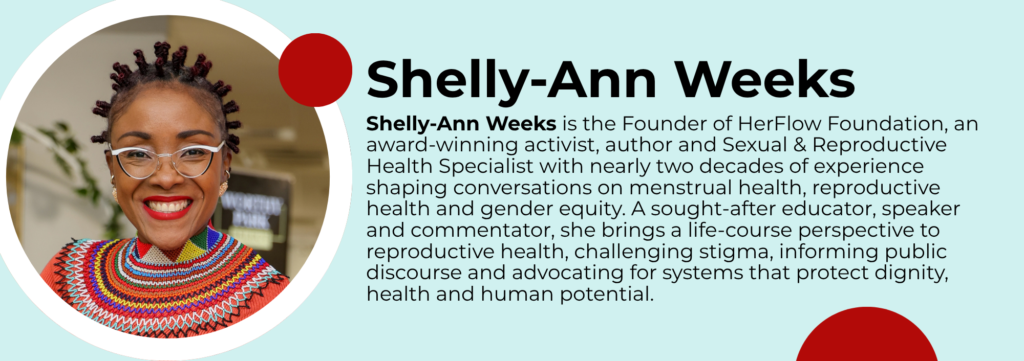
By Shelly-Ann Weeks
Founder, HerFlow Foundation | Sexual & Reproductive Health Specialist
There is a moment that almost every parent dread: The Talk.
They imagine looking in the innocent face of their tiny child, taking a deep breath and somehow finding the perfect words to explain puberty, sex, relationships, periods, pregnancy and everything else we think they need to know. And the time is never right to have the talk, because when is it ever the right time to say those words to their baby?
But what if parents misunderstood the assignment?
There is no single Talk. There are hundreds of small conversations that should happen throughout a child’s life, and continues into adulthood.
The real hack is to start the conversation early and don’t try to explain everything all at once. A conversation about naming body parts – the correct scientific names – can begin early. Use the names in everyday conversations while doing normal activities like taking a bath. Say “this is your vulva”, or “make sure you wash your penis”, even “here, dry your nipples”. This will help normalize the language and empower children to have a better understanding of their bodies.
Puberty brings conversations about body changes, periods, emotions and personal hygiene. Since they already have the language, now it’s about expected body changes and how their routines will change as they continue growing. With more growth and understanding, add discussions about boundaries, consent, relationships, contraception, pregnancy, sexually transmitted infections, digital safety and healthy decision-making.
The World Health Organization describes comprehensive sexuality education as an incremental, age-appropriate process that can begin in early childhood and develop as children grow. It includes bodies, relationships, puberty, menstruation, consent, contraception, pregnancy and sexual health.
And the need is significant. UNICEF estimates that there are 1.2 billion adolescents aged 10–19 globally—the largest adolescent population in history.
Children don’t need one uncomfortable conversation about sex. They need trusted adults who are willing to keep talking as their questions, bodies, relationships and circumstances change.
The main posture of a caring parent should be curiosity, openness and patience. Communicate to your child that they can always trust you with their questions, that you will tell them the truth and it’s ok for them to be curious about their changing bodies.
Keep the conversation going.